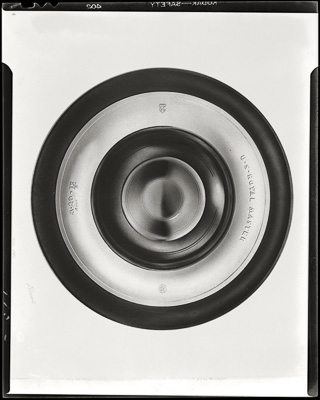
This 4x5 negative is the only relic that I preserved from the photo archives of the Uniroyal Tire Plant. Dated 10-29-1947, this is negative 9752 of Illustration 141, by J. Vincent.
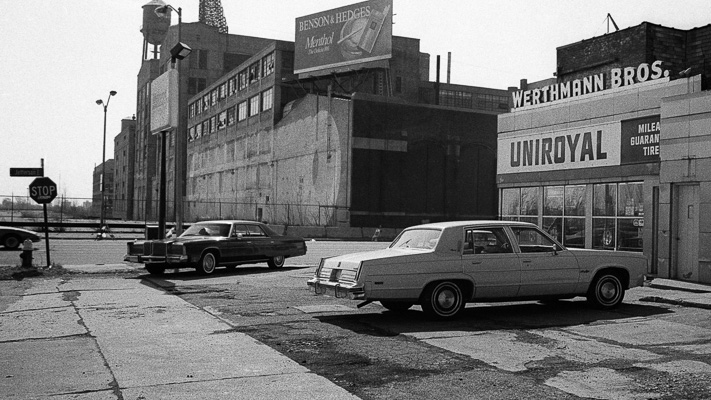
Cousins of my family owned & operated this business for decades and compelled my spelunking of the vacant, and soon-to-be demolished complex.
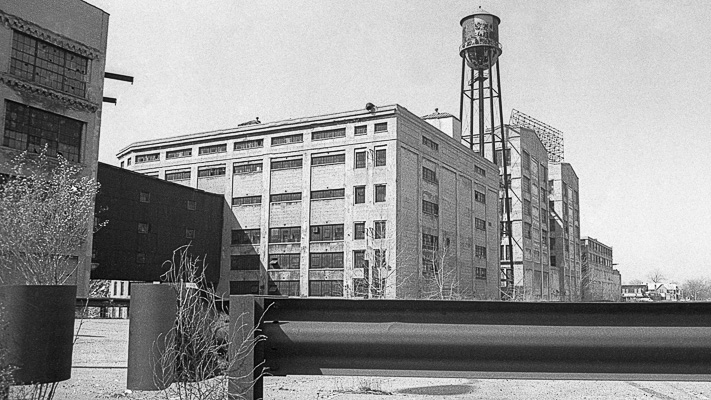
Originally opened in 1906, a gradual expansion was led by architect Albert Kahn in 1920 that eventually turned the 40-acre site into a sprawling complex.
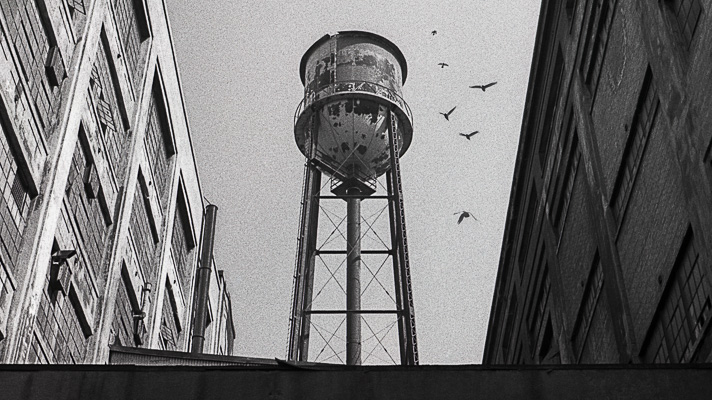
The facility's water tower was visible from many points on its 40-acre site.
Vacancy, silence, abandonment, and even the idea of renewal was profoundly felt when walking about this complex.
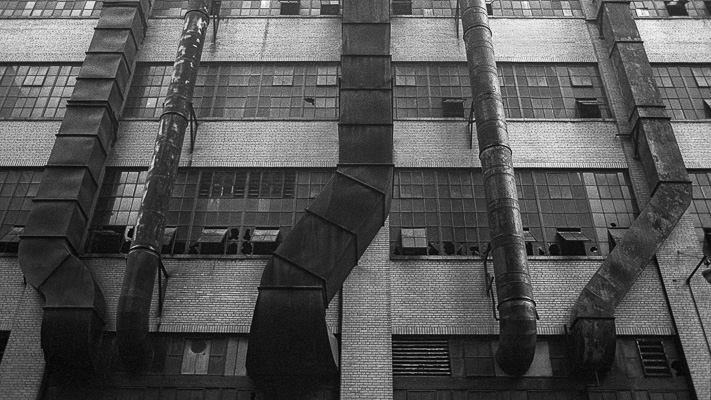
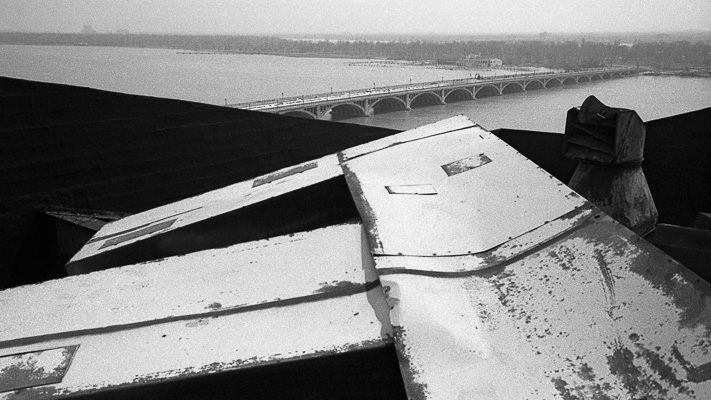
Ductwork clings & claws its way up the side of a six-story factory structure.
Although these photographs are 40-years old in 2025, the architectural details & styling are 105-years old.
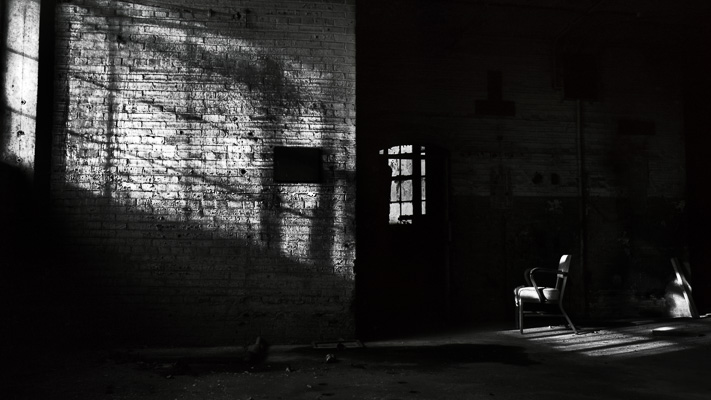
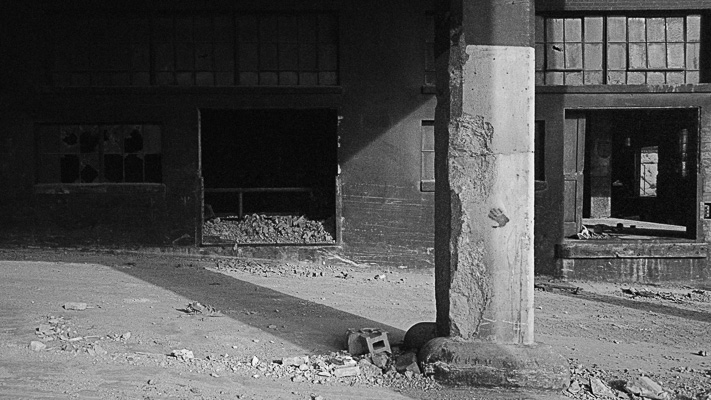
Poignant lighting enabled by Albert Kahn's architectural vision to illuminate industrial work spaces with natural light.
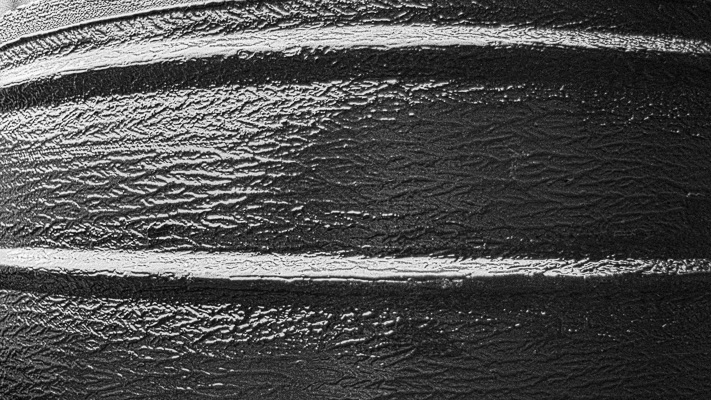
Rubber. As a raw material it possesses incredibly tactile surface qualities.
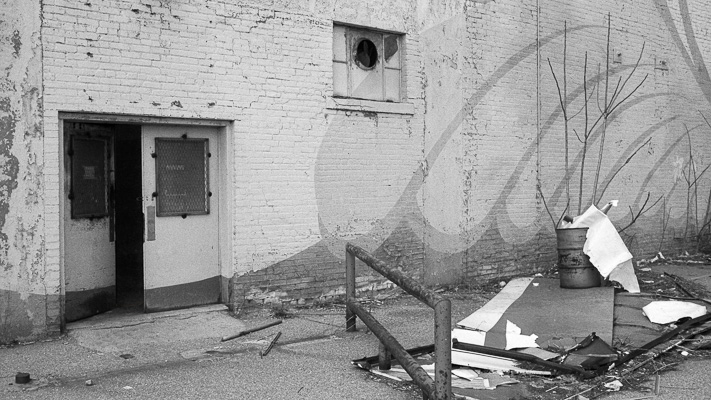
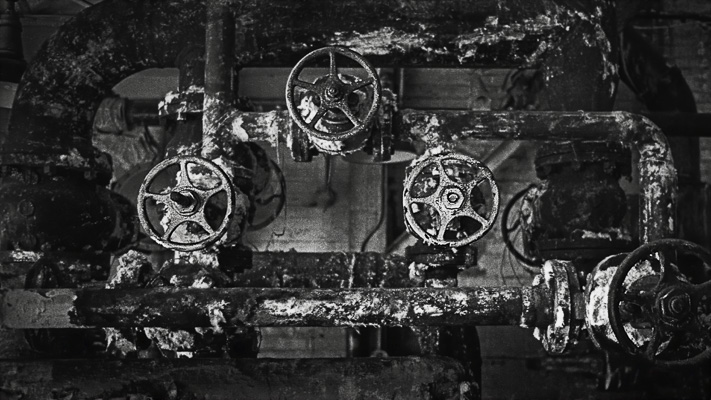
The residual, white material on surfaces was most likely asbestos, which provided a layer of exterior insulation and corrosion protection.
The helmet-like head on camera left silently converses with its decades-old iron girder acquaintance.
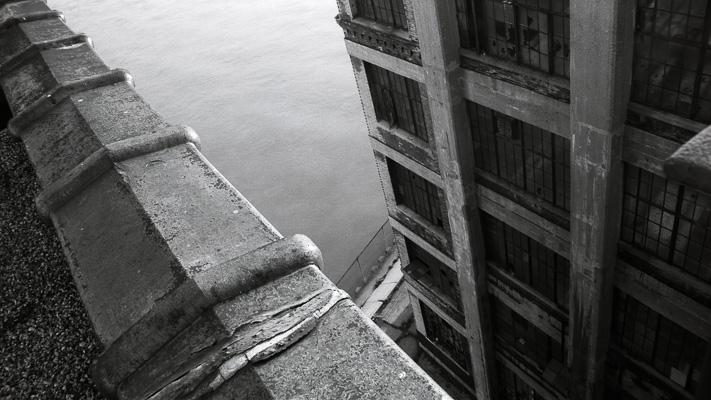
Residing on the edge of the Detroit River, some buildings offered an imposing presence six-stories above the water.
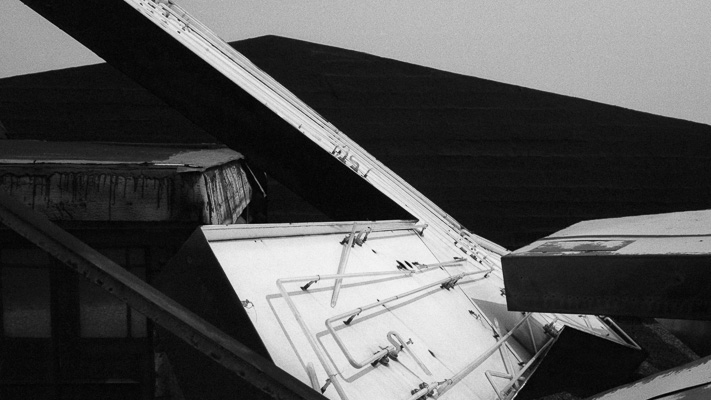
Massive letter forms rested on the roof after years of visibility to name the home of Uniroyal Tires.
Uniroyal Tire was situated immediately adjacent to the Belle Isle Bridge, and the Detroit Boat Club on the opposing shoreline.
The handprint in these vast, cavernous, industrial spaces immediately brought to mind Paleolithic cave paintings in France & Spain.
A dramatic sunbeam represented the idea of hope that my native City of Detroit was starving for in 1985.